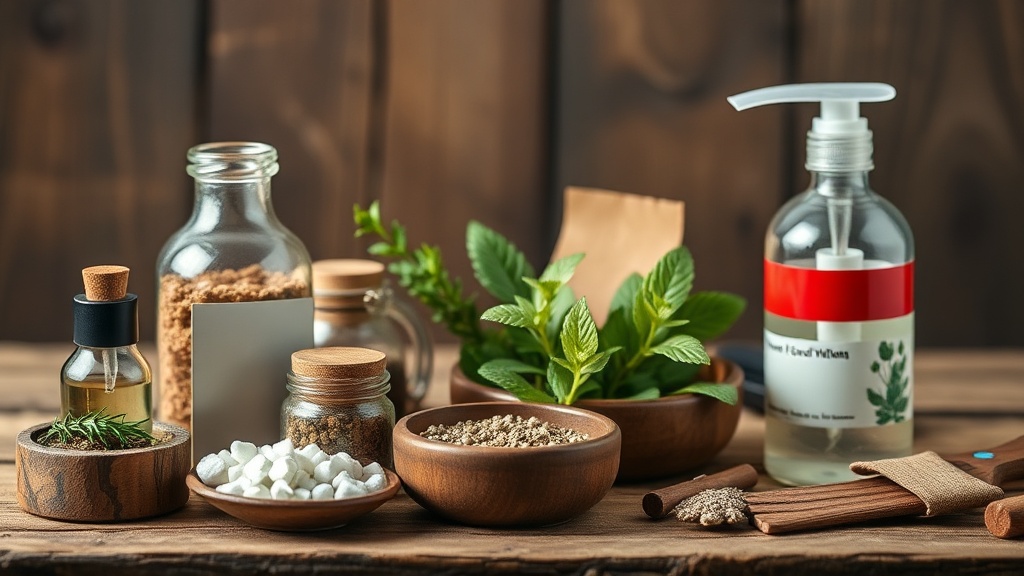
How to Build a Practical Herbal First Aid Kit for Your Home

You're chopping vegetables for dinner when the knife slips. A small cut—nothing serious, but it stings and won't stop bleeding. You could rummage through the bathroom cabinet for a standard adhesive bandage, or you could reach for something that supports your body's natural healing process while soothing the irritated tissue. That's where a well-stocked herbal first aid kit changes the game.
Building a home herbal first aid collection isn't about replacing conventional medical care. It's about having gentle, plant-based options ready for the minor bumps, burns, bites, and bruises that happen in everyday life. The right herbs can reduce inflammation, fight bacteria, calm irritated skin, and speed healing—all without the synthetic additives found in many over-the-counter products.
What Should Go in a Beginner's Herbal First Aid Kit?
Start with versatility. The best herbs for first aid are ones that handle multiple situations—because you don't need thirty different tinctures when five well-chosen remedies cover most scenarios.
Calendula tops the list. This bright orange flower (Calendula officinalis) works wonders on cuts, scrapes, and minor burns. Its antimicrobial and anti-inflammatory properties help prevent infection while stimulating tissue repair. You want it as a salve for topical application and dried flowers for making compresses. Studies published in the Journal of Wound Care have documented calendula's effectiveness in supporting wound healing.
Lavender essential oil deserves a spot too—not just for its pleasant scent. True lavender (Lavandula angustifolia) carries mild analgesic and antiseptic properties. A drop applied neat (undiluted) to minor burns or insect bites can reduce pain and swelling almost immediately. It's also remarkably calming—useful when someone's anxious after a minor injury.
Yarrow (Achillea millefolium) is the heavy hitter for stopping bleeding. The dried leaves and flowers, powdered and applied directly to a wound, act as a natural styptic. Native American tribes and European herbalists have used yarrow for centuries to treat battlefield wounds. Fresh yarrow leaves can be chewed into a poultice in emergencies—though dried powder stored in your kit is far more practical.
Plantain leaf—not the banana relative, but the common "weed" (Plantago major) growing in most yards—excels at drawing out splinters, soothing insect stings, and calming skin irritation. Keep dried plantain on hand for making strong teas (washes) or poultices. It's so common that you can likely find fresh leaves nearby if your kit runs low.
Comfrey (Symphytum officinale) rounds out the basics. Known traditionally as "knitbone," comfrey contains allantoin—a compound that accelerates cell division and wound healing. Use it for bruises, sprains, and closed wounds. Important safety note: Never apply comfrey to open wounds or deep cuts—it works so quickly that it can trap bacteria inside before the surface heals.
How Do You Prepare and Store Herbal Remedies for Long-Term Use?
Raw herbs are only useful if you can actually use them when needed. A chaotic bag of dried leaves won't help during a midnight kitchen mishap.
Start with proper containers. Amber glass bottles with tight-fitting lids protect tinctures and oils from light degradation. For dried herbs, airtight glass jars stored in a cool, dark cabinet maintain potency for 1-2 years. Label everything with the herb name, preparation date, and intended use—memory fails during stressful moments.
Tinctures (alcohol-based extracts) offer the longest shelf life—5 years or more when stored properly. They're concentrated, portable, and fast-acting. For first aid, you'll want calendula, yarrow, and echinacea tinctures. The alcohol content acts as a preservative and provides natural disinfection when applied to minor wounds.
Salves combine infused oils with beeswax for a shelf-stable, easy-to-apply preparation. A basic calendula-comfrey salve handles most skin complaints. Make small batches (4-8 ounces) since they typically last 1-2 years before the oils oxidize.
Hydrosols—the aromatic waters left after essential oil distillation—are gentler alternatives for children and sensitive skin. Lavender and tea tree hydrosols work well for cleaning wounds and cooling burns. Store them refrigerated when possible; they last 6-12 months.
Create a dedicated first aid bag or box that stays in an accessible location—under the kitchen sink, in the bathroom, or wherever your household naturally gravitates during minor emergencies. Include a small reference card listing each remedy and its primary uses. During an actual first aid situation, you don't want to be flipping through herbal manuals.
When Should You Use Herbs Versus Seeking Conventional Medical Care?
This distinction matters—herbal first aid has limits, and knowing them keeps everyone safe.
Herbs excel at handling minor, superficial issues: small cuts and scrapes, mild burns (first-degree), insect bites and stings, minor bruises, muscle strains, and superficial skin irritation. They're also excellent for supporting recovery alongside conventional treatment—calendula cream can complement stitches, for example, once a wound is properly closed.
But certain situations demand professional medical attention regardless of what your kit contains. Deep cuts requiring stitches, burns covering large areas or affecting the face/hands, bites from unknown animals, signs of infection (spreading redness, warmth, pus, fever), severe allergic reactions, head injuries, and broken bones all warrant immediate medical evaluation. Herbs can support these situations—yarrow might slow bleeding while you get to the emergency room—but they're not substitutes for professional care.
The FDA provides guidance on when over-the-counter treatments are appropriate versus when prescription or emergency care is needed. Similar logic applies to herbal preparations.
Always consider individual sensitivities too. Even natural substances trigger reactions in some people. Perform a small patch test when using a new topical preparation. Pregnant women, young children, and people taking pharmaceutical medications should check for contraindications—resources like the Natural Medicines Comprehensive Database provide evidence-based interaction information.
Document what you use. If a situation later requires medical attention, healthcare providers need to know what was applied to the wound. "Some herbal salve" isn't helpful—"calendula and comfrey salve applied twice daily" gives them useful information.
Making Your First Kit: A Practical Shopping List
If you're starting from scratch, here's a realistic initial investment that won't break the bank:
- Calendula flowers (dried) – 4 oz
- Yarrow leaf and flower (dried) – 2 oz
- Plantain leaf (dried) – 2 oz
- Comfrey root or leaf (dried) – 2 oz
- Lavender essential oil (organic) – 15 ml
- Tea tree essential oil (organic) – 15 ml
- Calendula-infused oil or salve – 4 oz
- Yarrow tincture – 2 oz
- Echinacea tincture – 2 oz
- Raw local honey (for wound dressing) – small jar
- Bentonite clay (for poultices) – 1 lb
- Clean gauze pads and cotton balls
- Medical tape and self-adhesive bandages
- Amber glass bottles and jars for storage
Expect to spend $75-125 for quality organic herbs and supplies. That investment provides enough material for hundreds of applications—far more economical than buying pre-made natural first aid products individually.
Building Confidence Through Practice
Having supplies means nothing if you panic when they're needed. Practice using your kit before emergencies happen. Make a calendula compress for a minor scratch. Apply yarrow powder to a shaving nick. Mix a clay poultice for a splinter.
This practice serves two purposes: you verify that your preparations work and you build muscle memory. When your child comes running with a skinned knee, you'll reach for the right remedy without hesitation. The confidence that comes from hands-on experience is perhaps the most valuable component of any first aid kit—herbal or otherwise.
Start small, add gradually, and focus on learning one remedy thoroughly before expanding. A simple kit you know how to use outperforms an elaborate collection that confuses you. Your home herbal first aid kit becomes a living resource—growing with your knowledge and adapted to your family's specific needs over time.